
The 5 Signs Your Sleep Tracker Is Hurting Your Sleep
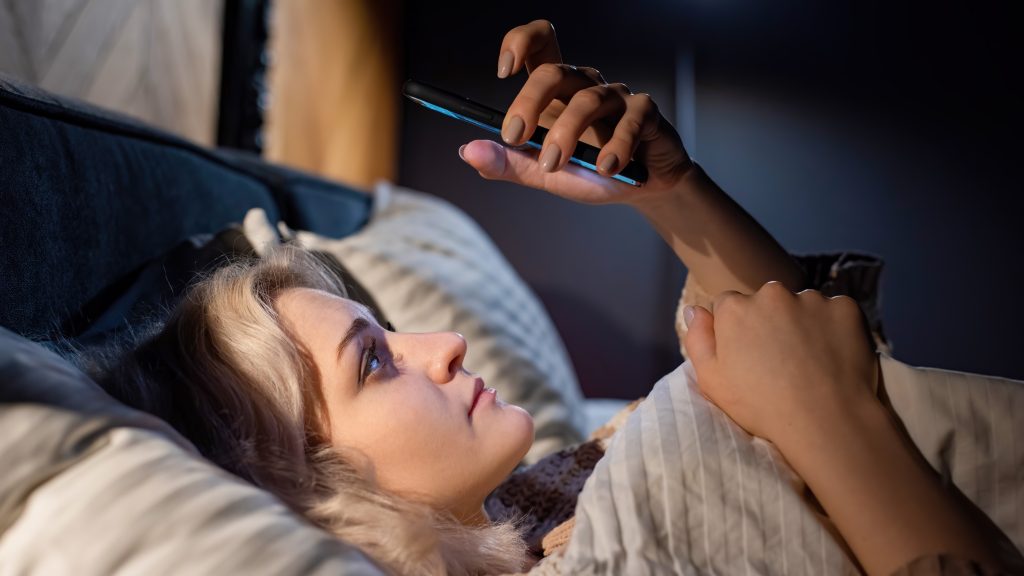
It is the middle of the morning.
You woke up feeling relatively refreshed, perhaps even a bit energized.
You stretch, take a breath, and then out of habit, you glance at your wrist or your phone. Your sleep tracker displays a “poor” score. Suddenly, the energy you felt just a moment ago evaporates. Your shoulders tense, a wave of exhaustion washes over you, and you find yourself thinking, “Well, today is going to be a disaster. I barely slept.”
If this scenario sounds familiar, you are certainly not alone. Many of the people who come to my practice at Quadra Wellness and Counselling have experienced this exact shift. Sleep trackers were designed to be helpful tools, providing insights into our nightly habits. However, for many, they have unintentionally become a primary source of stress. When our pursuit of perfect data begins to overshadow our actual lived experience of rest, we enter the realm of “orthosomnia”, an unhealthy obsession with achieving “perfect” sleep metrics.
Today, let’s explore five signs that your tracker might be doing more harm than good, and how we can shift our perspective to create a more welcoming environment for rest.
The Science: How Sleep Trackers Affect Your Mind?
To understand why a simple score can have such a profound impact, we must look at the brain’s “alarm system.” When you check your sleep data the moment you wake up, you are engaging your prefrontal cortex, the part of the brain responsible for analytical thinking and problem-solving.
The Data-Anxiety Connection
By immediately assessing your “sleep performance,” you are asking your brain to solve a problem that has already passed. This analytical engagement works against your body’s need to transition gently into the day. In the framework of Acceptance and Commitment Therapy (ACT), we talk about “cognitive fusion”, the tendency to treat our thoughts or, in this case, external data as absolute, unchangeable facts. When you fuse with a “poor” sleep score, you accept it as the final word on your physical state, even if your body feels otherwise.
This creates sleep performance anxiety. Even accurate data can be harmful if it triggers hyperarousal: a state where your nervous system remains on high alert because you are “monitoring” your sleep. Remember, your subjective experience of rest, how you feel, move, and function during the day, often matters far more than any digital metric.
The Psychology of Gamification: Why We Can’t Look Away
Part of the challenge is that these apps are designed to be addictive. They use the psychology of “gamification”, incorporating badges, streaks, and progress bars, to encourage daily engagement. While this is great for fitness tracking, it is often destructive for sleep.
When your sleep is turned into a game, you subconsciously begin to feel that you are “winning” or “losing” your night. This creates an enormous amount of pressure. You aren’t just sleeping anymore; you are competing against your own averages. If you don’t hit your target, the app’s interface, often coded with red colors or “needs improvement” warnings, acts as a negative feedback loop that triggers feelings of inadequacy. You aren’t failing at sleep, but the technology is framing your experience as a failure.
The Reality of Sleep Stages: Why Accuracy Matters (or Doesn’t)
Another layer of stress comes from the devices’ claims to measure sleep stages, such as REM, light, and deep sleep. It is important to understand that consumer wearables use algorithms to estimate these stages, not to definitively measure them. Clinical sleep studies (polysomnography) require EEG sensors that monitor brain waves directly. A wrist-worn device is simply not equipped to do this with clinical precision.
When you obsess over why you didn’t get enough “deep sleep,” you are likely obsessing over an estimation that could be entirely wrong. Many clients feel intense anxiety over their sleep architecture, only to discover that the device misidentified their periods of quiet wakefulness or light movement. Understanding that these numbers are just “best guesses” can be the first step in loosening their grip on your nervous system.
5 Signs Your Sleep Tracker Is Hurting Your Sleep
If you find yourself constantly checking your device, you might be caught in a cycle of tracker-induced anxiety. Here are five signs that it’s time to rethink your relationship with your data.
1. You Check Your Score Before You Assess How You Feel
We often reach for our devices before we even take a moment to notice our own breath or body sensations. By prioritizing the screen, you are letting external numbers dictate your expectations for the day.
What to try instead?
Practice a “body scan” before you reach for any technology. Ask yourself, “How do my limbs feel? Is my mind racing or calm?” Trusting your internal awareness is a key step in reconnecting with your own wisdom.
2. A “Bad Score” Ruins Your Day Before It Starts
I once worked with a client, Sarah, who would spend ten minutes analyzing her sleep phases every morning. If her device didn’t register enough “deep sleep,” she would convince herself she was incapacitated, regardless of her actual alertness. This is the expectation effect; the number becomes a self-fulfilling prophecy.
What to try instead?
Try a “tracker-free” morning routine for one week. Notice if your energy levels change when you aren’t being told how you “should” feel.
3. You’ve Started “Optimizing” for the Tracker, Not for Rest
Have you ever stayed in bed longer just to hit an eight-hour target, even if you were wide awake? Or have you avoided a fun evening activity because it might affect your “readiness score”? When sleep becomes a performance metric, you spend more time in bed, which, according to CBT-I principles, can actually weaken your “sleep pressure” , the natural drive to sleep.
What to try instead?
Focus on how you feel throughout the day. If you are tired, rest. If you are energized, live. Let your life, not a device, guide your schedule.
4. Your Anxiety About Sleep Has Increased Since You Started Tracking
Bedtime should be a sanctuary, but for many, it has become a high-stakes test. If you find yourself worrying about whether you will get a “good score” before you even close your eyes, your tracker has become a source of pre-sleep stress. This anxiety loop, worrying about sleep leads to worse sleep, which leads to more checking, is the hallmark of sleep tracker anxiety.
What to try instead?
Take a two-week “tracker break.” Observe how your relationship with your bedtime routine changes when the pressure to perform is removed.
5. You Trust the Data More Than Your Own Body
If you wake up feeling well-rested but feel a sense of doubt because your tracker says you had “restless sleep,” you are disconnecting from your body’s wisdom.
What to try instead?
Practice interoception: the ability to perceive your internal physical signals. Your body is a much more sophisticated instrument than a wrist-worn sensor.
Sleep Tracker: Tool vs. Obstacle
| Tracker Behavior | Healthy Use (As a Tool) | Unhealthy Use (As an Obstacle) |
|---|---|---|
| Primary Motivation | Casual curiosity about broad, long-term trends. | Constant, daily validation of “how well” I slept. |
| Morning Routine | Checking data as a low-priority weekly overview. | Immediately checking for a “score” to dictate the day. |
| Decision Making | Listening to body cues first, then checking data. | Overriding body sensations to match the data’s “advice.” |
| Response to “Poor” Data | Noting potential factors without judgment. | Feeling anxious, frustrated, or like a failure. |
| Relationship to Bed | Using the bed primarily for rest and relaxation. | Attempting to “perform” in bed to get better stats. |
When Sleep Tracking CAN Be Helpful
It is important to note that not all tracking is detrimental. Some use cases, such as identifying broad, long-term patterns or working alongside a healthcare provider, can be useful. The key difference lies in intention: using data as background information, not as an identity or a cause for daily stress. Consider shifting from a daily obsession to a weekly review.
The CBT-I + ACT Approach: An Integration for Rest
When it comes to resolving sleep struggles, we don’t have to rely on a single path. By combining the structured behavioral strategies of Cognitive Behavioral Therapy for Insomnia (CBT-I) with the mindful, psychological flexibility of Acceptance and Commitment Therapy (ACT), we create a compassionate, highly effective framework.
Think of CBT-I as the structural support that optimizes your sleep habits, while ACT is the gentle mindset shift that helps you stop fighting your mind when you are awake. Together, they quiet the biological alarm system that your sleep tracker has set off.
From CBT-I: Breaking the Cycle of Performance Pressure
CBT-I is the gold standard for treating chronic sleep issues because it focuses directly on the behaviors and habits that keep us awake. One of the most common habits sleep trackers encourage is sleep monitoring, constantly checking, tracking, and analyzing our sleep.
In CBT-I, we recognize sleep monitoring as a “safety behavior” that actually backfires. When you constantly check your tracker, your brain receives a signal that sleep is a threat or a performance task that needs to be managed. This hyper-focus keeps your nervous system on high alert.
Through a CBT-I lens, we work to:
- De-escalate Bedtime Anxiety: We break the automatic habit of clock-watching and tracker-checking. When you stop looking at the numbers, you take away the fuel that feeds sleep performance anxiety.
- Strengthen Sleep Efficiency: Instead of trying to “force” yourself to stay in bed longer to satisfy an app’s sleep duration goal, we focus on matching your time in bed to your actual ability to sleep. This builds a strong, healthy association between your bed and deep rest.
- Shift to Subjective Quality: We transition your focus away from the tracker’s metrics and back to your daytime functioning. If you can move through your day with relative ease, the exact number of light or deep sleep minutes your watch recorded simply doesn’t matter.
Learn more about the CBT-I approach to sleep here.
From ACT: Dropping the Struggle and Reclaiming Your Mind
While CBT-I addresses your sleep habits, ACT addresses your relationship with sleeplessness. When your sleep tracker displays a poor score, your mind immediately generates stressful thoughts: “I’m going to be a zombie today,” or “My health is suffering.”
In ACT, we use a tool called cognitive defusion to help you step back from these thoughts. Instead of treating a poor sleep score or a worried thought as an absolute, terrifying truth, we learn to see it as just a passing mental event, a collection of words, not a physical reality.
Through an ACT lens, we practice:
- Cognitive Defusion in Action: When your tracker gives you a low readiness score, instead of thinking, “Today is ruined,” you gently reframe it: “I am having the thought that my day will be difficult because of this number.” This simple shift creates immediate breathing room for your mind.
- Willingness and Acceptance: Sleep cannot be forced; it can only be invited. ACT teaches us to drop the exhausting struggle to fall asleep. If you are awake, we practice holding that wakefulness with gentle kindness rather than frustration. When you stop fighting sleeplessness, your nervous system can finally down-regulate.
- Living Your Values, Regardless of Your Score: Your life is too important to be put on hold by a number on your wrist. ACT encourages you to engage in what matters to you, connecting with loved ones, enjoying hobbies, or focusing on work even after a night of poor sleep. You can live a rich, meaningful day even when you are tired.
Moreover to navigate the difference between both of these approaches read the article CBT-I vs ACT for insomnia.
A 7-Day Tracker Fast: Your Path to Reconnection
If you are ready to break free, consider this structured 7-day approach:
- Days 1-2: Keep the tracker on, but hide the app notifications. Practice assessing how you feel before you open the app.
- Days 3-4: Remove the device at night entirely. Place it in a drawer and focus on your environment: the coolness of your sheets, the silence of the room.
- Days 5-6: Focus on your “subjective energy.” At 10:00 AM, write down how you feel on a scale of 1–10.
- Day 7: Reflect. Did you feel more “in tune” with your needs? Did the pressure to perform fade?
By the end of the week, you may realize that your body’s wisdom is far more reliable than an algorithm.
Conclusion
Wanting better sleep is a natural and understandable goal, but tools that create anxiety about the process cannot help you sleep. The goal of a healthy relationship with rest isn’t perfect data; it is a life where sleep serves you, not the other way around. Trust your body’s wisdom; it knows how to rest far better than any algorithm. If sleep anxiety has become overwhelming, know that with gentle, evidence-based practices, you can reclaim your relationship with the night.
Ready to transform your relationship with sleep? Learn more about our “Gently to Sleep” program and take the first step toward restful nights and energized days. Contact us to schedule a free sleep consultation.