A complete guide on how to use melatonin to get rid of jet lag and its alternatives! If you’ve ever found yourself wide awake at 3 a.m. after a long flight or struggling to stay alert during an afternoon meeting in a new time zone, you’re not alone. Jet lag […]
You Had a Rough Night. Now What? We’ve all been there – tossing and turning, watching the clock, hoping sleep will come. Maybe it was a stressful day, an early morning ahead, or no reason at all. You wake up feeling drained and discouraged. And the first thought that hits […]
Your body feels heavy. Your eyes burn. Your muscles ache for rest. By all accounts, you should be drifting off the moment your head hits the pillow. Instead, your mind kicks into high gear the instant the lights go out. Sound familiar? You’re experiencing one of the most frustrating sleep […]
Ditch the Sleeping Pills: Natural Sleep Solutions That Actually Work! Struggling to fall asleep night after night? The exhaustion affects your mood, focus, and productivity, leading many to turn to prescription sleeping pills for quick relief. But over time, side effects like grogginess, dependency, and increased tolerance become apparent, making […]
Sleep is one of the most essential pillars of health, yet many of us struggle to get enough quality rest. While there’s no magic pill for good sleep, research shows that exercise plays a significant role in improving the conditions for restorative sleep. Importantly, exercise doesn’t directly make you sleep—instead, it helps […]
Sleepless nights can feel like an endless battle, leaving you frustrated and exhausted. If you’re one of the millions struggling with insomnia, you’re not alone. At Quadra Wellness, we understand the toll that sleep difficulties can take on your physical and mental well-being. That’s why we’re excited to share three […]
Have you ever found yourself lying awake at night, desperately willing your mind to shut off and your body to relax? As the hours tick by, your frustration grows, and you become increasingly anxious about not being able to fall asleep. This scenario is all too familiar for those struggling […]
Sleep challenges can feel overwhelming and isolating, especially when you’ve tried countless remedies without success. If you’re struggling with persistent sleep difficulties, you’re not alone. While insomnia affects millions worldwide, there’s a scientifically-proven approach that offers real hope: CBT-I. This specialized form of cognitive behavioral therapy has emerged as the […]
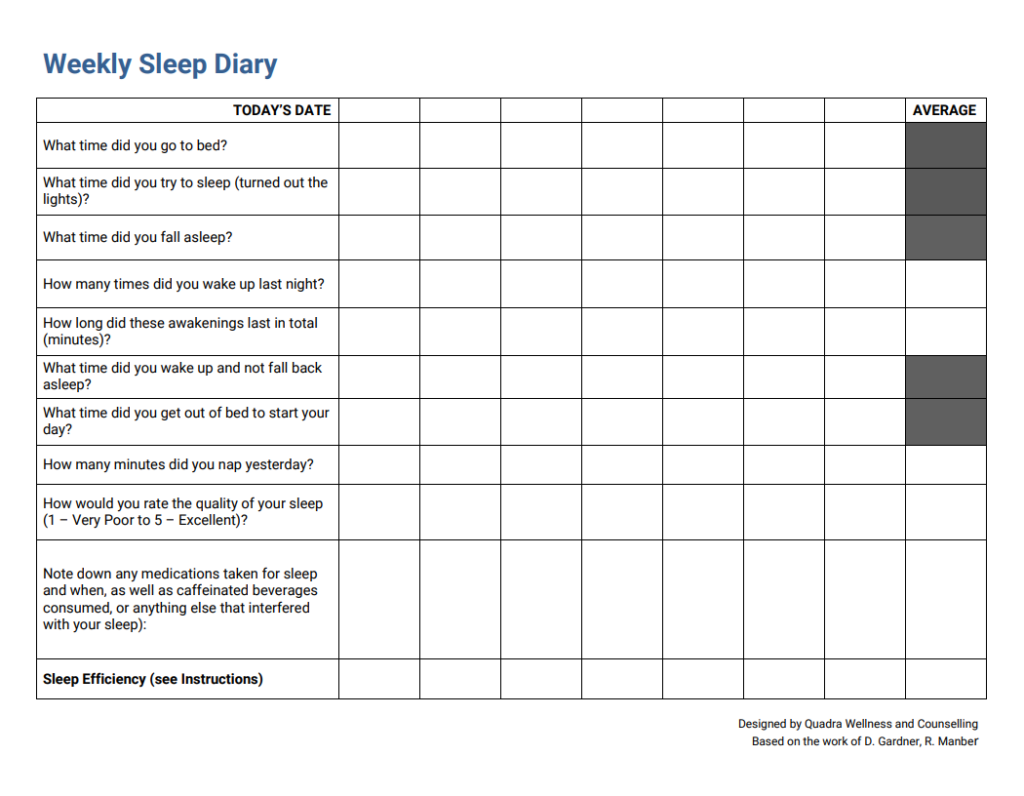
If you’re looking to improve your sleep, one of the most effective tools at your disposal is surprisingly simple: a sleep diary. This straightforward method can provide valuable insights into your sleep patterns and help you build a stronger sleep drive. Let’s explore how a sleep diary works and why […]
What Are Employee Wellness Programs? Employee wellness programs are structured, evidence-based initiatives that help employees improve their physical, mental, and emotional health. They range from individual workshops on sleep and stress management to comprehensive, ongoing support programs tailored to your team’s needs. At Quadra Wellness, we focus on a few […]