
Body Jerks and Sleep: What Your Twitches Are Telling You About Stress
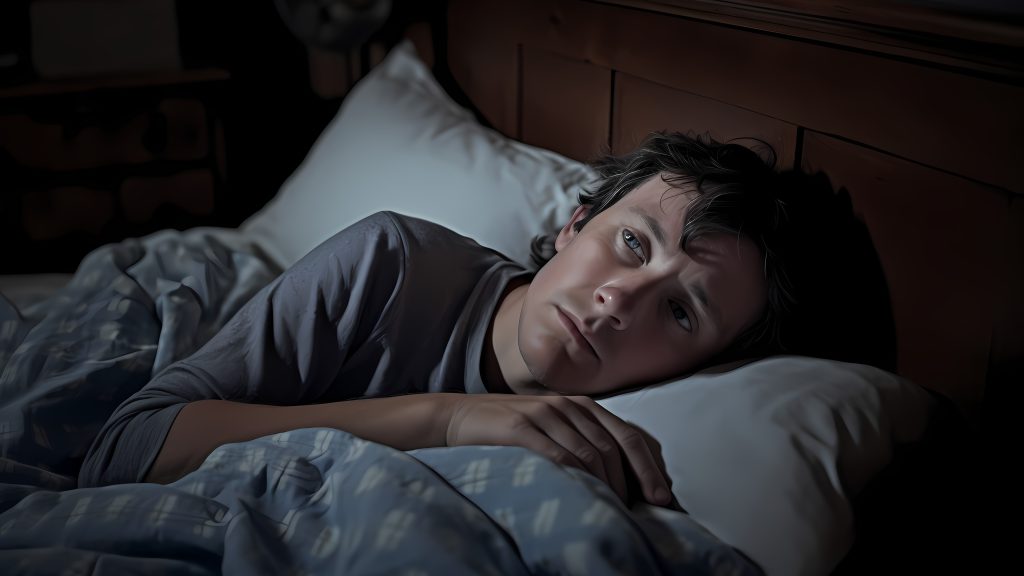
You’re finally drifting off to sleep, that peaceful moment when your mind starts to quiet and your body begins to relax when suddenly your leg jerks violently, jolting you back to alertness.
Your heart races. The relaxation you’d built up disappears instantly. And now you’re wide awake, frustrated, wondering what just happened and whether you’ll ever actually fall asleep tonight.
Or perhaps you notice your body twitching in sleep throughout the night, sometimes waking you up, sometimes noticed by your partner who wonders if you’re okay. These involuntary movements can be unsettling, even embarrassing. And if you’re someone who already struggles with sleep, they add yet another layer of frustration to an already difficult experience.
Here’s what you need to know: those body jerks during sleep called hypnic jerks or sleep starts are actually quite common. Most people experience them occasionally. But when they happen frequently, especially when falling asleep, they’re often telling you something important about your stress levels and nervous system activation. Understanding this connection can help you address not just the jerks themselves, but the underlying patterns that are affecting your sleep quality.
What Are Hypnic Jerks? The Science of Sleep Twitches
Hypnic jerks (also called hypnagogic jerks or sleep starts) are sudden, involuntary muscle contractions that occur as you’re falling asleep. They often affect the legs but can involve the arms, body, or even a generalized full-body jerk. They typically happen during the transition from wakefulness to sleep; that drowsy, in-between state.
Scientists aren’t entirely certain why hypnic jerks occur, but the most accepted theory relates to a conflict between two systems:
As you fall asleep, your muscles begin to relax and your nervous system shifts from an active, alert state to a restorative, sleep state. Sometimes, your brain misinterprets this sudden muscle relaxation as falling, and triggers a protective startle response. It’s as if your brain thinks you’re about to fall off a cliff and jerks you awake to “save” you.
This might sound almost comical, but it points to something important: hypnic jerks are more common when your nervous system is in a heightened state of arousal. When your stress system is activated, when you’re anxious, stressed, or hyper-vigilant, your brain is more likely to misinterpret that transition into sleep as danger.
This is why people who are stressed, anxious, or dealing with insomnia tend to experience hypnic jerks more frequently. Your body is literally too alert to transition smoothly into sleep.
The Stress-Sleep Twitch Connection
Think of your nervous system as having two modes: sympathetic (alert, active, “fight or flight”) and parasympathetic (calm, restorative, “rest and digest”). To fall asleep, you need to shift from sympathetic to parasympathetic dominance.
When you’re stressed, your sympathetic nervous system stays active even when you’re trying to sleep. This creates what we call hyperarousal; a state where your body is physically tired but your nervous system remains vigilant and activated.
Hyperarousal shows up in several ways:
- Racing thoughts as you try to fall asleep
- Muscle tension that won’t fully release
- Heightened awareness of sounds and sensations
- Difficulty feeling “settled” in your body
- Increased hypnic jerks and muscle twitches
I worked with Marcus, a software engineer who came to me exhausted but unable to sleep well. “Every time I start to drift off, my whole body jerks and I’m awake again,” he told me. “Sometimes it happens five or six times before I actually fall asleep. I am starting to dread going to bed.”
Learn why do men twitch in their sleep!
When we explored his stress levels, a clear picture emerged: demanding work deadlines, relationship concerns, financial worries. His mind was racing with problems to solve, and his body, despite being exhausted, couldn’t let go of that activation. The hypnic jerks were his body’s way of showing him just how amped up his nervous system was.

5 Ways to Reduce Body Jerks and Improve Sleep Quality
1. Create a Wind-Down Buffer (Lower Your Arousal Before Bed)
You can’t go from high-stress activity to sleep in five minutes any more than you can stop a moving car instantly. Your nervous system needs a wind-down period to shift from sympathetic to parasympathetic dominance.
Create a 60-90 minute wind-down routine before bed:
- Dim the lights (bright light signals wakefulness to your brain)
- Step away from screens (or use blue light filters)
- Engage in calming activities: reading, gentle stretching, listening to music
- Do something with your hands: journaling, coloring, folding laundry
The goal isn’t to force yourself to feel calm that creates more pressure. It’s simply to remove stimulating inputs and create space for your nervous system to naturally downshift.
2. Practice Progressive Muscle Relaxation
Since body jerks often relate to carried tension trying to release suddenly, deliberately releasing that tension before bed can help.
Progressive Muscle Relaxation (PMR) technique:
- Starting with your feet, tense each muscle group for 5 seconds, then release
- Move upward: calves, thighs, glutes, abdomen, chest, hands, arms, shoulders, face
- Notice the difference between tension and relaxation
- Do this while already lying in bed, about 15-20 minutes before you want to sleep
This practice serves two purposes: it releases physical tension before sleep, and it teaches your body what relaxation actually feels like (many people with chronic stress don’t recognize they’re holding tension).
3. Address the Cognitive Component (What You’re Thinking About)
Hypnic jerks are often accompanied by racing thoughts and worry. If your mind is spinning through tomorrow’s to-do list or replaying today’s stressful moments, your body receives those worry signals as “stay alert.”
Try a “worry dump” before bed:
- Keep a notebook by your bed
- Write down everything on your mind: worries, tasks, thoughts
- This isn’t journaling or processing; it’s simply getting thoughts out of your head and onto paper
- Tell yourself: “I’ve written it down. I can address this tomorrow. Right now I am resting.”
This practice, common in CBT for insomnia, helps create psychological separation between daytime concerns and sleep time.
4. Work With the Jerks Instead of Fighting Them
When a hypnic jerk happens, the natural response is frustration: “Not again! Now I’ll never fall asleep!” This reaction increases arousal and makes falling asleep even harder.
Try an acceptance-based approach (ACT technique): When a hypnic jerk happens, instead of fighting it:
- Take a slow breath
- Think: “There’s a hypnic jerk. My nervous system is still activated. That’s okay.”
- Let your body settle again naturally, without trying to force sleep
- If you need to, get up briefly and do something calming, then return to bed
Remember: the jerk itself lasts only a second. It’s the frustration and subsequent arousal that keeps you awake for the next hour. By responding with acceptance instead of frustration, you create the conditions for sleep to return more quickly.
5. Address Your Daytime Stress Patterns
Here’s the truth: you can’t fully resolve frequent hypnic jerks without addressing why your nervous system is so activated in the first place. This means looking at your daytime stress.
Questions to consider:
- Are you taking breaks during the day, or pushing through constantly?
- Do you have practices that help discharge stress (movement, social connection, creative expression)?
- Are you getting enough sunlight and time outdoors?
- Are there ongoing stressors that need direct problem-solving?
Sometimes, the most effective intervention for nighttime symptoms is daytime stress management. This might mean setting boundaries, delegating tasks, or working with a therapist to develop better coping strategies.
For people experiencing stress-related insomnia, addressing both the sleep symptoms and the underlying stress is essential for lasting improvement.
Explore: The connection between sleep paralysis and insomnia.
Your Nervous System Can Learn to Settle
Marcus’s story had a positive arc. After six weeks of working together on stress management, sleep hygiene, and creating a proper wind-down routine, he reported: “The hypnic jerks still happen occasionally, but maybe once or twice a week instead of every single night. And when they do happen, I don’t panic anymore. I know it just means I had a stressful day and my body needs extra time to settle.”
This is what healing looks like, not perfection, but a significant reduction in symptoms and, perhaps more importantly, a different relationship with them when they do occur.
Your body jerks are messengers, not enemies. They’re telling you that your nervous system needs support in downshifting from the demands of your day. By creating the conditions for that downshift through wind-down routines, tension release, thought management, and daytime stress reduction you can reduce both the frequency of hypnic jerks and the overall quality of your sleep.
Change doesn’t happen overnight. Your nervous system has learned to stay activated, and it will take time to teach it that it’s safe to relax. But with consistent practice and support, that shift is absolutely possible. Ready to transform your relationship with sleep?
Learn more about our Gently to Sleep program and take the first step toward restful nights and energized days. Contact us to schedule a free sleep consultation.