
Can’t Sleep When It’s Hot? 12 Science-Backed Cooling Strategies
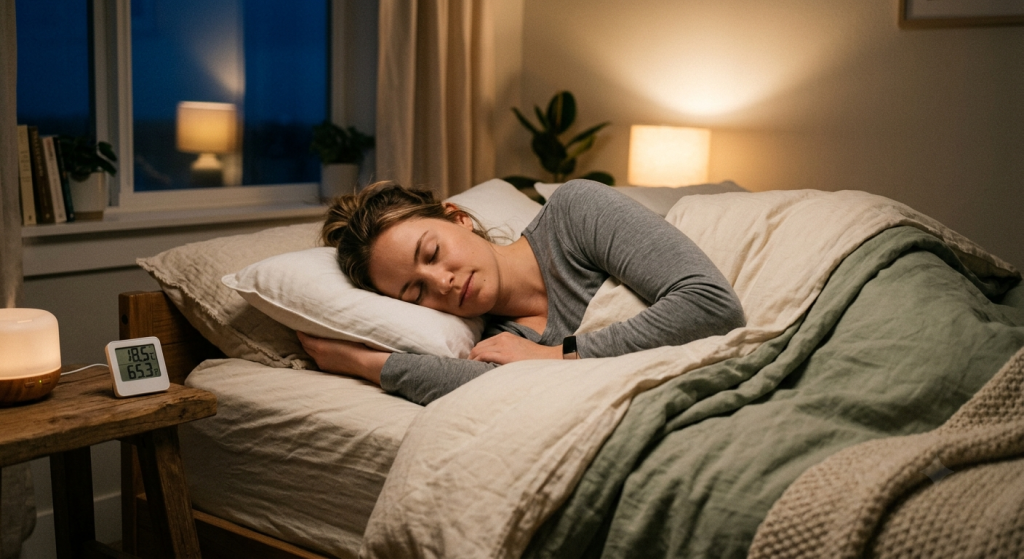
Have you ever researched about the relationship between sleep and body temperature or the temperature around you?
We have all experienced those long, restless nights where the air feels heavy, the sheets feel like a trap, and sleep seems to be retreating further away with every passing minute. When it is too hot to sleep, the frustration is physical, mental, and deeply exhausting. You find yourself tossing, turning, and checking the clock, wondering why your body refuses to settle even when you are bone-tired.
If you are currently struggling with how to sleep in hot weather, please know that your frustration is completely valid. It is not a sign that you are doing something wrong, and it certainly does not mean you have lost the ability to sleep. Your body is a finely tuned instrument, and it requires a specific set of conditions to initiate the transition into slumber. When the ambient temperature rises, those conditions are disrupted.
The good news is that you do not need to simply endure the heat. By understanding the science of thermoregulation and implementing a few gentle, evidence-based adjustments, you can create a much more welcoming environment for sleep, even on the warmest nights.
The Science of Sleep and Temperature
To understand why heat makes sleep so difficult, we have to look at the relationship between your core body temperature and your circadian rhythm. Your body temperature does not stay static throughout the day; it follows a predictable cycle.
As you prepare for sleep, your internal core temperature naturally begins to drop. This cooling process is a vital biological signal to your brain that it is time to release melatonin and shift into sleep mode. This drop in core temperature is one of the most reliable “gatekeepers” of sleep.
However, when your environment is warm, it interferes with your body’s ability to shed heat. If the room is too hot, your skin cannot dissipate warmth efficiently, which prevents your core temperature from reaching the level required for deep, sustained sleep. Essentially, the external heat “fights” your internal cooling mechanism. This creates a state of physiological arousal, making it difficult for the nervous system to relax and for the sleep drive to take over.
Common Factors That Keep You Awake in the Heat
When we explore why it feels too hot to sleep, it is helpful to look at the factors that exacerbate the problem. It is rarely just the temperature of the air itself; it is the interaction between your environment and your body’s responses.
Bedding Materials and Heat Retention
Many traditional bedding options are designed for comfort rather than temperature regulation. Heavy fabrics, synthetic materials, and dense weaves trap heat close to the body, preventing the airflow necessary for your skin to “breathe” and release warmth.
Humidity Levels
Temperature is only half of the equation. High humidity prevents sweat from evaporating off your skin. Since evaporation is the primary way your body cools itself down, high humidity can make a room that is technically “only” moderately warm feel absolutely stifling.
The Feedback Loop of Frustration
As mentioned, sleep works best when we create the conditions for it to arrive, rather than forcing it to happen. When you are hot, you may find yourself becoming agitated or anxious. This emotional response causes the heart rate to increase and the body to tense up, both of which generate more internal heat, further complicating the cooling process.
12 Cooling Strategies
Creating a sleep-friendly climate is about optimizing your environment so that your body’s cooling process can proceed naturally. Here are twelve actionable strategies to help you stay comfortable.
1. Optimize Your Bedding
Switch to natural, breathable fibers like lightweight cotton, linen, or bamboo. These materials allow for better air circulation and moisture-wicking, which helps keep your skin cool throughout the night.
2. Leverage Evaporative Cooling
If the air is dry, you can use a fan placed strategically near an open window or a small bowl of ice water. As the air passes over the water, it evaporates and cools the immediate area, providing a gentle breeze.
3. The Bedtime Shower Technique
Taking a shower about 60 to 90 minutes before bed can help. While a cold shower might seem appealing, a lukewarm or slightly warm shower is often more effective. It encourages your blood vessels to dilate, which helps your body release core heat more effectively once you step out and towel off.
4. Strategic Window Management
Keep windows, blinds, and curtains closed during the heat of the day to block out solar radiation. Open them only when the outside temperature drops below the indoor temperature, usually in the late evening or early morning.
5. Hydration and Timing
While staying hydrated is vital, try to front-load your water intake earlier in the day. Drinking large amounts of fluid right before bed can lead to multiple nighttime awakenings, which are particularly difficult to manage when you are already struggling with heat-related discomfort.
6. Chill Your Pulse Points
Applying a cold compress or a wrapped ice pack to your pulse points, such as your wrists, neck, or ankles, for a few minutes before bed can help lower your peripheral temperature, which assists in shedding core heat.
7. Evaluate Your Mattress
Some mattresses are designed with memory foam that traps heat. If your mattress retains warmth, consider using a specialized cooling mattress topper or a breathable pad to create a barrier that improves airflow.
8. Manage Your Sleepwear
Opt for loose-fitting, light sleepwear, or consider sleeping without pajamas if that feels more comfortable. The goal is to allow your skin to remain in contact with the air and your cooling bedding.
9. Utilize the “Fan Effect” Wisely
A fan does not technically lower the temperature of the room, but it aids in evaporation and air movement. Ensure your fan is positioned to circulate air effectively without blowing directly on your face, which can cause dry eyes or throat irritation.
10. The ACT Approach: Cognitive Defusion
When you feel the heat, it is natural to think, “I can’t sleep, I’m burning up.” Try to observe this as a thought rather than a final reality. Use cognitive defusion: “I am having the thought that it is too hot to sleep.” This creates a small space between you and the feeling, reducing the emotional reactivity that can make discomfort feel even more intense. If racing thoughts tend to keep you awake, our article on what to do when your mind won’t stop at night explores additional strategies for calming mental chatter before bed.
11. Keep Your Feet Cool
Because your feet contain many blood vessels and are at the end of the circulatory loop, cooling them can be remarkably effective at bringing down your overall body temperature. Try keeping them outside the covers if you feel warm.
12. Stick to Your Sleep Window
Even if the weather is warm, resist the urge to abandon your sleep schedule. Consistency helps maintain the integrity of your circadian rhythm. If you find yourself struggling for more than 20 minutes, use the stimulus control techniques outlined in our guide on how to navigate nighttime awakenings.

Strategic Cooling Timeline
The table below can help you strategize to cool your body and environment and improve your sleep quality.
| Timeframe | Strategy | Objective |
|---|---|---|
| Daytime | Strategic Window Management | Prevent heat buildup inside the bedroom. |
| Early Evening | Hydration Management | Ensure hydration without causing night wakings. |
| Pre-Bed (60-90 mins) | Lukewarm Shower | Promote blood vessel dilation for cooling. |
| Pre-Bed (15 mins) | Pulse Point Cooling | Lower skin temperature to assist core cooling. |
| At Bedtime | Cognitive Defusion | Reduce emotional reactivity to physical heat. |
| During Night | Consistent Wake Times | Maintain circadian rhythm despite heat. |
Creating Welcoming Conditions
It is important to remember that you cannot force sleep to happen, even in the perfect environment. Sleep is a biological state that occurs when we provide our bodies with the right context. When it is hot, the context is simply a little more challenging to create.
If you find that your sleep is still disrupted, treat it with the same gentle curiosity you would apply to any other challenge. Perhaps your room needs better ventilation, or perhaps you need to focus more on your wind-down ritual to ensure you are entering the bedroom in a calm, relaxed state. If you find yourself frustrated, return to the principles of CBT-I, focusing on maintaining your sleep window and trusting that your body knows how to rest once the conditions are right.
Gradual improvement is the goal. You are teaching your body a new way to interact with your environment, and that takes time. Celebrate the small victories, the nights where you felt a little cooler, the mornings where you felt slightly more refreshed, and the moments where you successfully managed your own frustration.
Ready to transform your relationship with sleep? Learn more about our “Gently to Sleep” program and take the first step toward restful nights and energized days. Contact now to book a FREE sleep consultation today.